02 · Companies · Attainable & workforce housing · Vermont + Florida
Common Frame.
Attainable and workforce housing built faster and for less, with programs and services that help residents thrive and partnerships that make the numbers work.
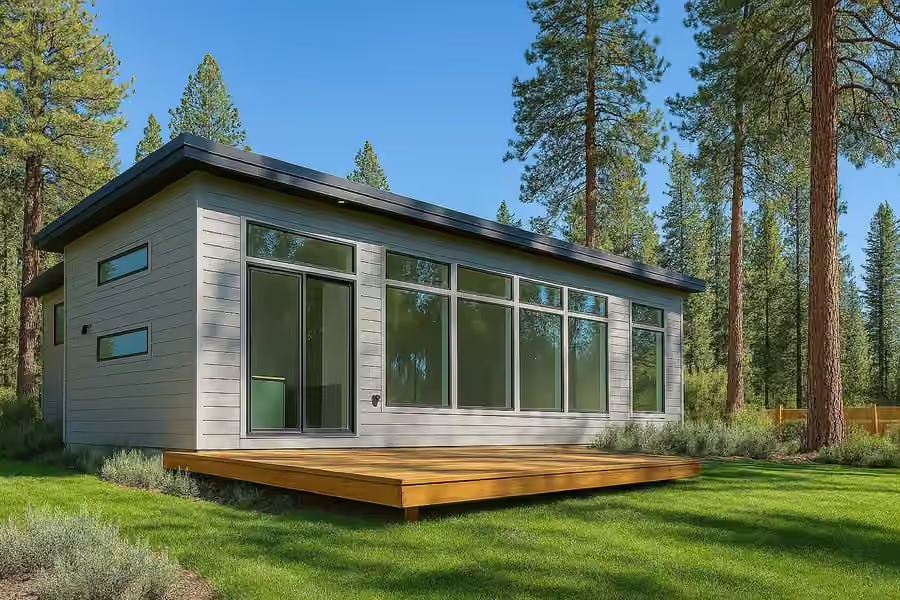
- Focus
- Attainable & workforce housing
- Markets · 2 states
- Vermont and Florida
- Approach
- New ways to build, plus services for residents
How we build
We pick the method that fits each site, climate and budget.
Modular
Homes built in a factory while the site is prepared, then set in place, which shortens schedules and cuts weather delays.
Containers
Repurposed steel shipping containers as a strong, fast starting point for small homes and mixed-use buildings.
Robotics
Automated framing and assembly for consistent quality with smaller crews.
3D printing
Printed concrete walls that go up in days, with less waste and strong resistance to weather.
More than a place to live
Every Common Frame community is planned around programs and services for residents, such as:
- Community space and on-site events
- Financial coaching and paths to ownership
- Connections to transit, childcare and healthcare
- Job training with local employers
Built with partners
Government
Land, zoning and funding programs that bring rents and prices within reach.
Employers
Reserved homes and master leases so teams can live near where they work.
Service providers
Health, childcare, transit and training partners who bring services on site.
Where we're starting
Two states with very different weather and the same shortage of homes people can afford.
Vermont
Small towns and seasonal economies where employers can't find housing for their teams, and building seasons are short.
Florida
Fast-growing cities and towns where rents have outrun wages, and homes need to stand up to storms.
Where we're looking
Vermont and Florida.
The kinds of places we look at
Examples to show what fits, not current deals.
Example
Town-owned land near schools and transit
Parcels a town wants to put to work for local families.
Example
An employer campus with room to build
Homes within walking distance of the job.
Example
Infill lots in established neighborhoods
Small sites where modular and printed homes fit quickly.
How a project comes together
Size the need
With a town or employer, we work out how many homes are needed and at what price.
Site and funding
We line up land, zoning and the public and private programs that make the numbers work.
Choose the method
Modular, container, robotic or 3D-printed, whichever fits the site, climate and budget.
Build
Faster schedules and less waste, with homes built to local codes and inspected like any other.
Support residents
Programs and on-site services that help residents stay and do well.
Why now
Both states we're starting in need far more homes that working households can afford.
| Estimate | Homes |
|---|---|
| Low end | 24,000 |
| High end | 36,000 |
Questions
What does “attainable” mean?
Homes priced for working households: teachers, nurses, first responders and service workers who earn too much for subsidized housing but can't afford market rents.
Will the homes be for rent or for sale?
It depends on the site and partners. Some projects may offer both.
Do new building methods hold up?
Every home is built to local building codes and inspected like any other. We choose methods that suit the local weather.
I'm an employer. How can we get involved?
Reserved homes and master leases can put your team close to work. Start with the partner form.
Can I invest?
Any investment would be offered only through formal offering documents, to investors whose accredited status has been verified under Rule 506(c), where the law allows. Send a note through the partner form and we'll follow up.
A town, an employer or a site that needs homes people can afford?
Start a conversation Download the one-pager